
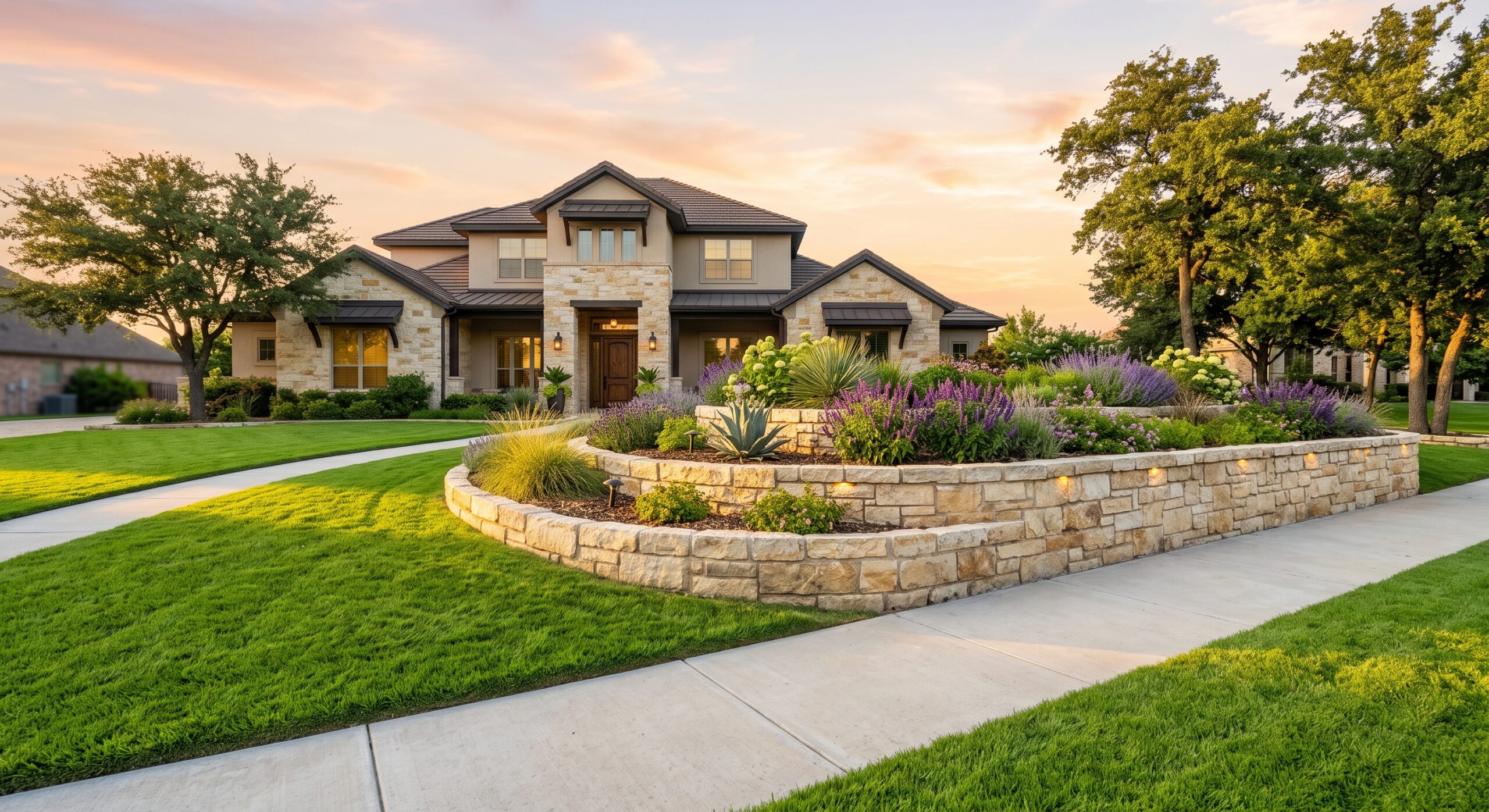
Stone Retaining Walls: How a 1 to 3 Foot Wall Boosts Curb Appeal and Property Value in North Texas
Ask anyone at EcoFlow Landscaping what our most requested service is, and the answer is easy: stone retaining walls. There is a reason homeowners across North Texas keep coming back to this one project. A well-built retaining wall does more for a property than almost any other single landscaping investment, and it does it without needing to be massive to make an impact.
You do not need a towering wall to see real results. Even a modest 1 to 3 foot stone retaining wall can completely change the way a property looks and functions.
Why Retaining Walls Are Our Number One Service
North Texas yards are full of slopes, uneven grading, and drainage challenges, especially in newer developments where the natural topsoil was stripped and regraded during construction. A retaining wall solves practical problems: it holds back soil, creates usable flat space on a sloped lot, controls erosion, and directs water away from your foundation.
But the reason it is our most popular service is not just function. It is what a well-built wall does for the way a home looks and feels from the street.
Curb Appeal: The First Thing Everyone Notices
A stone retaining wall instantly gives a yard structure and intention. Flat, sloped, or oddly graded front yards can look unfinished no matter how much you invest in plants or mulch. A retaining wall creates clean lines, defined planting beds, and a sense of architecture that ties the landscaping to the house itself.
Even a low wall, in the 1 to 2 foot range, framing a flower bed, a walkway, or the base of a slope, gives a yard a finished, custom look that flat landscaping simply cannot match. It draws the eye, creates depth, and signals to anyone walking or driving by that the property has been thoughtfully designed, not just maintained.
Property Value: A Real Return on Investment
Retaining walls are one of the few landscaping upgrades that appraisers, real estate agents, and buyers consistently notice and value. A well-built stone wall does three things that directly support property value:
It solves a problem instead of hiding one. Erosion, drainage issues, and sloped, unusable yard space are red flags for buyers. A properly engineered retaining wall eliminates those concerns and turns a liability into a landscaping feature.
It creates usable outdoor space. Terracing a sloped backyard with a series of low walls can turn wasted, unusable grade into a flat patio area, garden space, or level lawn. Usable square footage outdoors is a real selling point.
It reads as quality construction. Buyers and appraisers can tell the difference between a DIY timber wall that is already leaning and a properly built stone wall with correct drainage and footing. Quality hardscaping signals that the rest of the property has likely been well cared for too.
What Makes a Retaining Wall Actually Well Built
This is where a lot of retaining walls, especially DIY or budget builds, go wrong. A wall that looks fine on installation day but fails within a year or two is worse than no wall at all. Here is what separates a wall that lasts decades from one that will need to be redone.
Proper excavation and base preparation. Every good wall starts below ground, not above it. That means digging a trench below grade and building a compacted gravel base that is level and deep enough to support the wall’s height and the soil load behind it. Skipping this step is the single most common reason retaining walls fail.
Drainage, drainage, drainage. Water is the enemy of every retaining wall. Without a way for water to escape from behind the wall, hydrostatic pressure builds up and eventually pushes the wall out of alignment, cracks it, or topples it entirely. A properly built wall includes gravel backfill and often a perforated drain pipe behind the stone to give water somewhere to go besides pushing on your wall.
Proper batter and setback. Retaining walls are not built perfectly vertical. Each course is set back slightly from the one below it, which angles the wall back into the hillside. That batter is what allows the wall to resist the pressure of the soil behind it rather than fighting it head on.
The right stone for the job. Not every stone is rated for structural retaining wall use. We select stone based on the height of the wall, the load it needs to hold, and the look the homeowner wants, whether that is a natural fieldstone look, a clean cut block, or a more formal dressed stone finish.
Correct wall height for the application. Walls between 1 and 3 feet are popular for a reason. They solve most residential grading and curb appeal needs without triggering the engineering and permitting requirements that come with taller walls in many North Texas municipalities. That makes them faster to build, more affordable, and just as effective for the vast majority of yards.
The EcoFlow Difference
We have built our reputation on retaining walls that are engineered to last, not just to look good on installation day. Every wall we build starts with proper excavation, a compacted base, and a real drainage plan behind the stone, not just in front of it. That is why it is our number one service and our most repeated referral source. Homeowners see a neighbor’s wall holding up perfectly three years later and call us next.
Ready to Transform Your Yard?
Whether you are dealing with a sloped front yard that needs structure, a backyard that needs usable flat space, or you simply want the clean, finished look a stone retaining wall brings to a property, EcoFlow Landscaping can design and build it right.
Contact EcoFlow Landscaping today for a free consultation and see what a properly built retaining wall can do for your curb appeal and your property value.