
If you are shopping for a new fence in Flower Mound, Southlake, Keller, or anywhere in the DFW area, you have probably already figured out that getting a straight answer on price is harder than it should be. One company quotes you $8,000, another comes in at $16,000 for what sounds like the same job, and you are left wondering what you are actually paying for.
This guide breaks down what a cedar fence actually costs in the DFW market right now, what drives the price up or down, and what to watch out for when you are comparing quotes.
What Cedar Fences Cost in DFW Right Now
For a standard six-foot cedar privacy fence in the Dallas-Fort Worth area, you are looking at $35 to $55 per linear foot installed in 2026, which means a typical 200-foot residential fence runs between $7,000 and $11,000 for the complete installation. Grizzlydfw
That is the honest middle-of-the-road number for a properly installed board-on-board or privacy fence with quality materials and a crew that knows what they are doing. A smaller yard with 150 feet of fencing will run closer to $5,000 to $8,000. A larger property with 300 or more feet, multiple gates, and significant grade changes can push past $15,000.
Labor costs in Texas run from $16 to $28 per linear foot in 2026, with most projects averaging around $22 per foot. Materials make up the rest. The type of cedar you choose is the biggest variable on the material side.
Western Red Cedar vs. Other Options
Not all cedar is the same and this matters more than most homeowners realize when they are comparing quotes.
Western Red Cedar is the highest quality, longest lasting, and most aesthetically pleasing type of cedar fencing. If stained and sealed every three to five years, a Western Red Cedar fence will essentially last a lifetime. It costs more upfront than alternatives but the lifespan difference is significant.
Pressure-treated pine costs less upfront but requires more maintenance and typically does not last as long. For most Flower Mound homeowners, cedar’s longer lifespan and lower maintenance make it the better long-term investment despite the higher initial cost.
When you are getting quotes, ask specifically what grade and species of wood the contractor is using. A quote that comes in significantly below the others is usually using a lower-grade material, thinner boards, or skipping on post depth and concrete footings.
What Drives the Cost Up
Several things push a fence project toward the higher end of the range. Gate installations add $400 to $1,200 per gate depending on size and hardware. A longer fence line is obviously more expensive but the per-foot price often comes down slightly on larger projects. Significant grade changes on sloped lots require stepped or racked fence panels that take more time and skill to install correctly. Removing and disposing of an existing fence adds to the cost as well, typically $3 to $8 per linear foot for tear-down and haul-off.
Access to the yard is something a lot of homeowners do not think about. If the only way to get materials into the backyard is through a narrow side gate, it slows the job down and affects the labor cost.
If your property is in a Flower Mound HOA, and most newer developments are, plan on submitting a written request with material, color, height, and a site plan to the architectural review committee and waiting for approval, typically two to four weeks depending on the HOA’s meeting schedule. A contractor who has already worked in your specific neighborhood can help here because they often already know the HOA’s preferred cedar tone and submission requirements.
The Staining Question
Cedar needs to be stained and sealed to hold up long term in North Texas. Staining and sealing every three to five years keeps the wood protected and looking sharp. Some contractors include an initial stain in their quote. Many do not. Make sure you know which situation you are in before you sign anything.
EcoFlow offers professional fence staining as a standalone service, so if you have an existing cedar fence that has not been stained in a few years, that is worth addressing before the wood starts to gray out and dry. A good stain job costs considerably less than a fence replacement and can add years of life to a structurally sound fence.
Board-on-Board vs. Privacy Fence
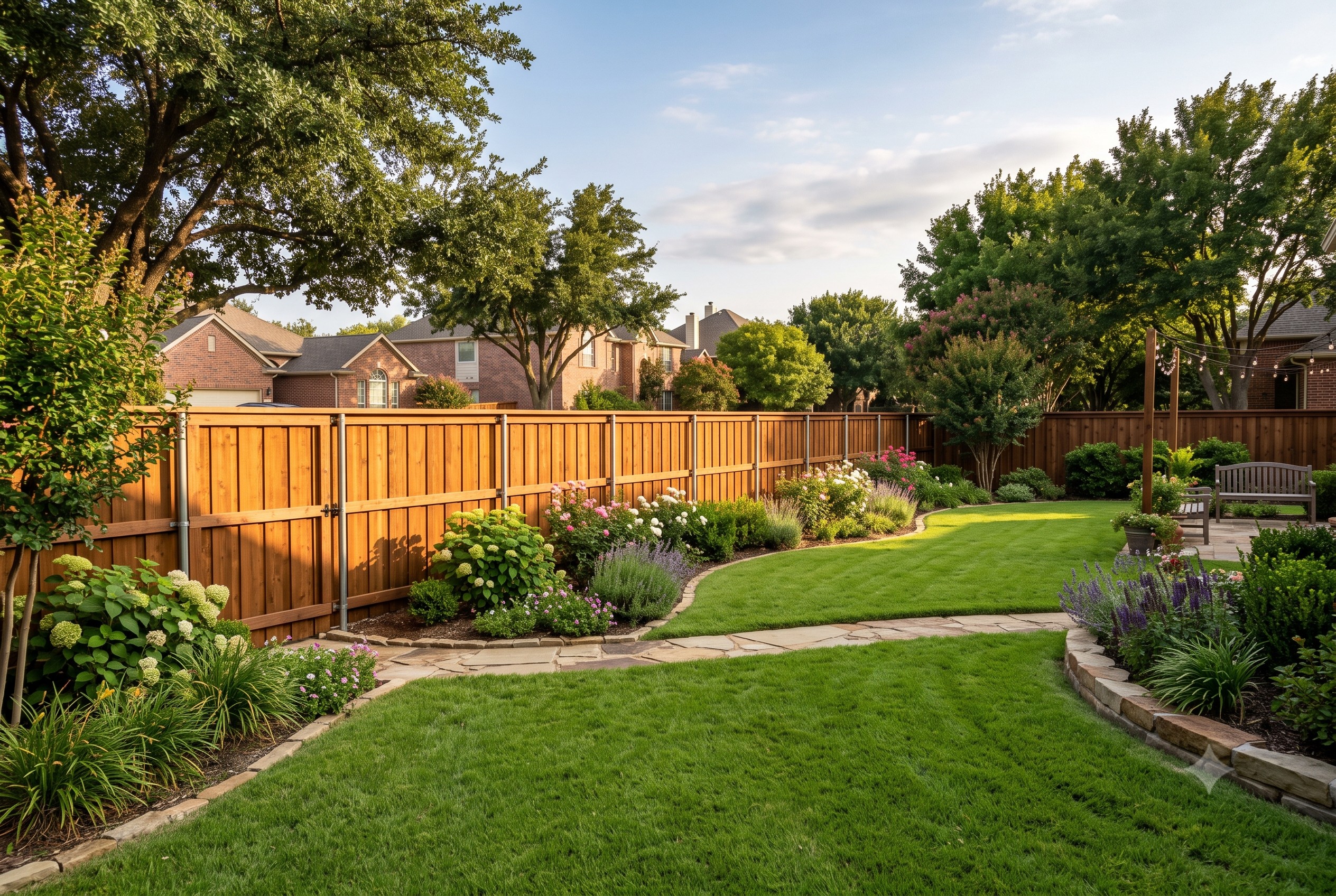
Board-on-board privacy fencing offers full privacy with no gaps, with pickets overlapping on alternating sides, and is the most popular style for backyards with excellent wind resistance. Side-by-side picket fencing is a traditional design with pickets flush against each other, offering a clean classic look at a lower price point than board-on-board.
In DFW, board-on-board is by far the most popular choice for backyard privacy fences. The overlapping boards give you complete privacy, handle the Texas wind better than a gapped fence, and look more substantial from both sides of the fence line.
What to Watch Out For in Low Bids
The fence market in DFW has a lot of competitors and the low-bid game is real. Here is what typically gets cut when a quote comes in surprisingly cheap.
Post depth is the big one. In North Texas clay soil, fence posts need to go deep enough and be set in concrete properly to stay plumb through the freeze and thaw cycles and the soil movement that comes with wet and dry seasons. A post set too shallow in a bag of dry concrete mix poured down the hole without water will fail within a few years. You will not see it in the quote. You will see it when your fence starts leaning.
Good galvanized or stainless steel screws and brackets help prevent rust in the humid Texas climate. Cheap fasteners rust through faster than the wood fails, and a fence held together with corroded hardware looks terrible and eventually comes apart. Ark Fence
Board thickness matters too. A thinner board looks fine when it goes up and looks rough two summers later when it starts warping and cracking in the Texas heat.
Repairs vs. Full Replacement
Not every fence situation requires starting over. EcoFlow handles fence repairs on existing cedar fences across Flower Mound and DFW and the honest answer is that a lot of fences that look rough just need some board replacements, new post footings on the sections that are leaning, and a fresh stain. That can run $800 to $3,000 depending on the scope and is often the right call on a fence that is structurally sound but showing its age cosmetically.
If the posts themselves are rotted at the base, which is the most common failure point in North Texas fences, the repair calculus changes. Replacing a rotted post requires digging out the old footing, which is labor-intensive. At some point a full replacement is more cost-effective than patching post by post.
How to Get an Accurate Number for Your Property
The most reliable way to get a useful fence quote is to have someone walk the property with you. The terrain, the access, any existing structures to work around, and the HOA requirements all affect what the project actually requires. An estimate done over the phone or based only on linear footage is going to be off.If you are shopping for a new fence in Flower Mound, Southlake, Keller, or anywhere in the DFW area, you have probably already figured out that getting a straight answer on price is harder than it should be. One company quotes you $8,000, another comes in at $16,000 for what sounds like the same job, and you are left wondering what you are actually paying for.
This guide breaks down what a cedar fence actually costs in the DFW market right now, what drives the price up or down, and what to watch out for when you are comparing quotes.
What Cedar Fences Cost in DFW Right Now
For a standard six-foot cedar privacy fence in the Dallas-Fort Worth area, you are looking at $35 to $55 per linear foot installed in 2026, which means a typical 200-foot residential fence runs between $7,000 and $11,000 for the complete installation. Grizzlydfw
That is the honest middle-of-the-road number for a properly installed board-on-board or privacy fence with quality materials and a crew that knows what they are doing. A smaller yard with 150 feet of fencing will run closer to $5,000 to $8,000. A larger property with 300 or more feet, multiple gates, and significant grade changes can push past $15,000.
Labor costs in Texas run from $16 to $28 per linear foot in 2026, with most projects averaging around $22 per foot. Materials make up the rest. The type of cedar you choose is the biggest variable on the material side.
Western Red Cedar vs. Other Options
Not all cedar is the same and this matters more than most homeowners realize when they are comparing quotes.
Western Red Cedar is the highest quality, longest lasting, and most aesthetically pleasing type of cedar fencing. If stained and sealed every three to five years, a Western Red Cedar fence will essentially last a lifetime. It costs more upfront than alternatives but the lifespan difference is significant.
Pressure-treated pine costs less upfront but requires more maintenance and typically does not last as long. For most Flower Mound homeowners, cedar’s longer lifespan and lower maintenance make it the better long-term investment despite the higher initial cost.
When you are getting quotes, ask specifically what grade and species of wood the contractor is using. A quote that comes in significantly below the others is usually using a lower-grade material, thinner boards, or skipping on post depth and concrete footings.
What Drives the Cost Up
Several things push a fence project toward the higher end of the range. Gate installations add $400 to $1,200 per gate depending on size and hardware. A longer fence line is obviously more expensive but the per-foot price often comes down slightly on larger projects. Significant grade changes on sloped lots require stepped or racked fence panels that take more time and skill to install correctly. Removing and disposing of an existing fence adds to the cost as well, typically $3 to $8 per linear foot for tear-down and haul-off.
Access to the yard is something a lot of homeowners do not think about. If the only way to get materials into the backyard is through a narrow side gate, it slows the job down and affects the labor cost.
If your property is in a Flower Mound HOA, and most newer developments are, plan on submitting a written request with material, color, height, and a site plan to the architectural review committee and waiting for approval, typically two to four weeks depending on the HOA’s meeting schedule. A contractor who has already worked in your specific neighborhood can help here because they often already know the HOA’s preferred cedar tone and submission requirements.
The Staining Question
Cedar needs to be stained and sealed to hold up long term in North Texas. Staining and sealing every three to five years keeps the wood protected and looking sharp. Some contractors include an initial stain in their quote. Many do not. Make sure you know which situation you are in before you sign anything.
EcoFlow offers professional fence staining as a standalone service, so if you have an existing cedar fence that has not been stained in a few years, that is worth addressing before the wood starts to gray out and dry. A good stain job costs considerably less than a fence replacement and can add years of life to a structurally sound fence.
Board-on-Board vs. Privacy Fence
Board-on-board privacy fencing offers full privacy with no gaps, with pickets overlapping on alternating sides, and is the most popular style for backyards with excellent wind resistance. Side-by-side picket fencing is a traditional design with pickets flush against each other, offering a clean classic look at a lower price point than board-on-board.
In DFW, board-on-board is by far the most popular choice for backyard privacy fences. The overlapping boards give you complete privacy, handle the Texas wind better than a gapped fence, and look more substantial from both sides of the fence line.
What to Watch Out For in Low Bids
The fence market in DFW has a lot of competitors and the low-bid game is real. Here is what typically gets cut when a quote comes in surprisingly cheap.
Post depth is the big one. In North Texas clay soil, fence posts need to go deep enough and be set in concrete properly to stay plumb through the freeze and thaw cycles and the soil movement that comes with wet and dry seasons. A post set too shallow in a bag of dry concrete mix poured down the hole without water will fail within a few years. You will not see it in the quote. You will see it when your fence starts leaning.
Good galvanized or stainless steel screws and brackets help prevent rust in the humid Texas climate. Cheap fasteners rust through faster than the wood fails, and a fence held together with corroded hardware looks terrible and eventually comes apart. Ark Fence
Board thickness matters too. A thinner board looks fine when it goes up and looks rough two summers later when it starts warping and cracking in the Texas heat.
Repairs vs. Full Replacement
Not every fence situation requires starting over. EcoFlow handles fence repairs on existing cedar fences across Flower Mound and DFW and the honest answer is that a lot of fences that look rough just need some board replacements, new post footings on the sections that are leaning, and a fresh stain. That can run $800 to $3,000 depending on the scope and is often the right call on a fence that is structurally sound but showing its age cosmetically.
If the posts themselves are rotted at the base, which is the most common failure point in North Texas fences, the repair calculus changes. Replacing a rotted post requires digging out the old footing, which is labor-intensive. At some point a full replacement is more cost-effective than patching post by post.
How to Get an Accurate Number for Your Property
The most reliable way to get a useful fence quote is to have someone walk the property with you. The terrain, the access, any existing structures to work around, and the HOA requirements all affect what the project actually requires. An estimate done over the phone or based only on linear footage is going to be off.