
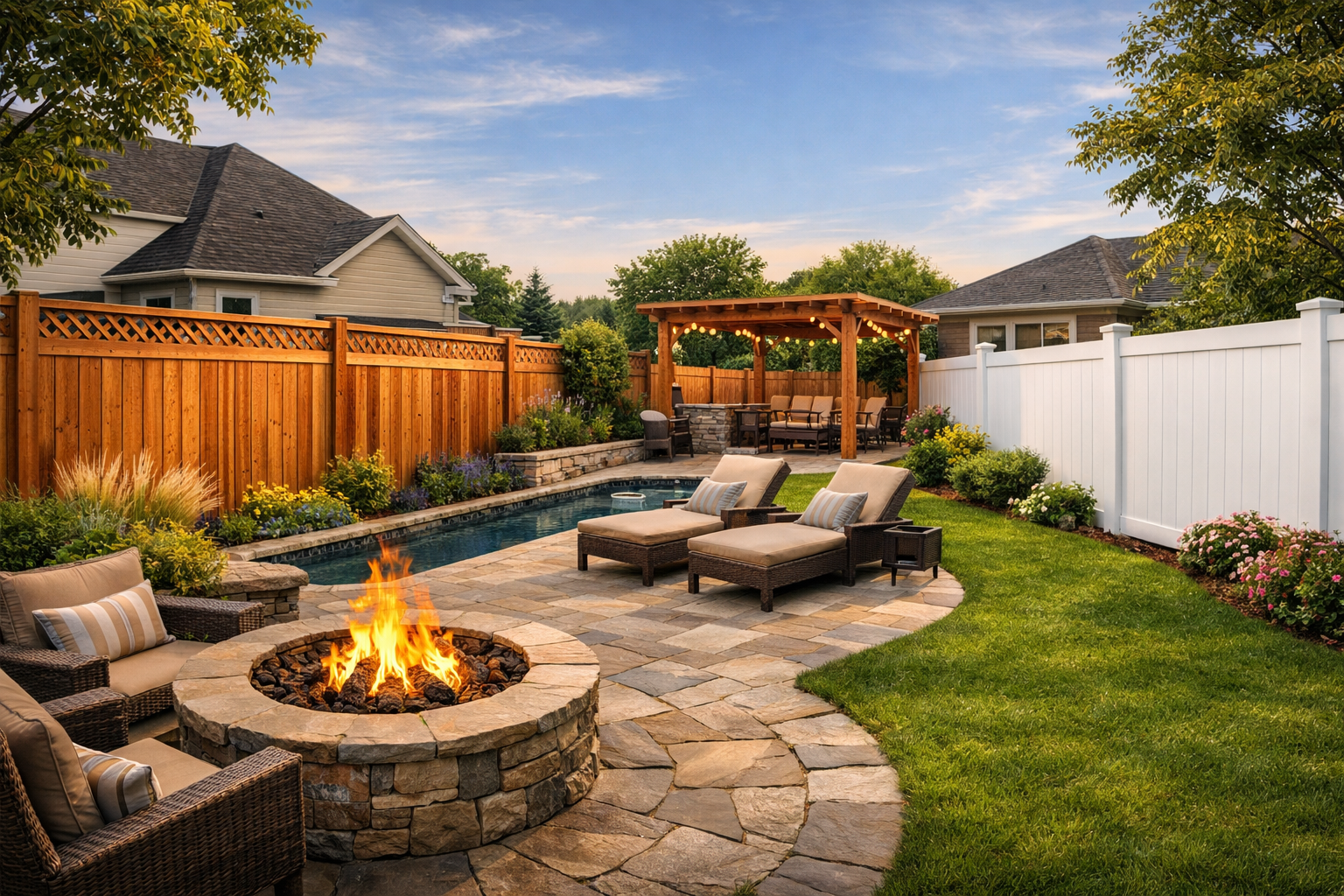
If you are getting quotes for a new fence in the Dallas-Fort Worth area, at some point someone is going to tell you that vinyl is the low maintenance option and cedar is the high maintenance one. That is not entirely wrong, but it is not the whole story either, and it is worth understanding the difference before you spend several thousand dollars on something that is going to be standing in your yard for the next two decades.
Let us start with cedar. Cedar is a natural wood that contains oils which make it inherently resistant to moisture, insects, and rot. In a climate like North Texas, where you get blazing summers, occasional ice storms, and those heavy spring rains we talked about, cedar holds up remarkably well as long as it is properly installed and stained every three to four years. A well-built cedar board on board fence installed by a crew that knows what they are doing, with proper post depth and concrete footings, can last 20 years or more. It also looks genuinely beautiful. There is a warmth and a texture to a cedar fence that vinyl simply cannot replicate, and in higher-end DFW neighborhoods it is what most homeowners prefer because it fits the aesthetic of the property.
The staining is the part that throws people off. Yes, you need to do it. But it is not an annual project and it is not expensive relative to what you have invested in the fence. A professional stain job every three to four years keeps the wood protected and looking sharp, and it costs considerably less than replacing a fence that was never properly maintained.
Vinyl is a different conversation. The appeal is obvious. It does not need staining, it does not rot, and it is easy to clean. For certain applications, particularly pool enclosures or side yard utility fences, it makes a lot of sense. But vinyl has real weaknesses in the DFW climate that do not get talked about enough. It expands and contracts significantly with temperature changes, and Texas puts that to the test every single year. Over time, panels warp and posts shift. When a vinyl fence gets hit by a falling branch or a piece of hail-driven debris, it cracks rather than dents, and replacing a cracked section is more involved than patching damaged wood. Vinyl also fades in the Texas sun over years, and once that bright white starts looking chalky and grey there is not much you can do about it short of painting it, which somewhat defeats the purpose.
The bottom line for most DFW homeowners is this. If you want a fence that looks like it belongs on the property, holds up in Texas weather, and can be repaired and maintained affordably over time, cedar is the better choice. If you have a specific application where staining is genuinely not feasible and you want a no-touch solution for a utility area, vinyl works fine for that.
EcoFlow installs cedar fences across Flower Mound, Southlake, Keller, Trophy Club, Argyle, and the surrounding DFW area. We also repair and stain existing fences that are structurally sound but need some attention. If you are trying to decide what makes sense for your property, give us a call at (469) 224-8300 or email us at info@ecoflowlandscape.com and we will give you a straight answer.