
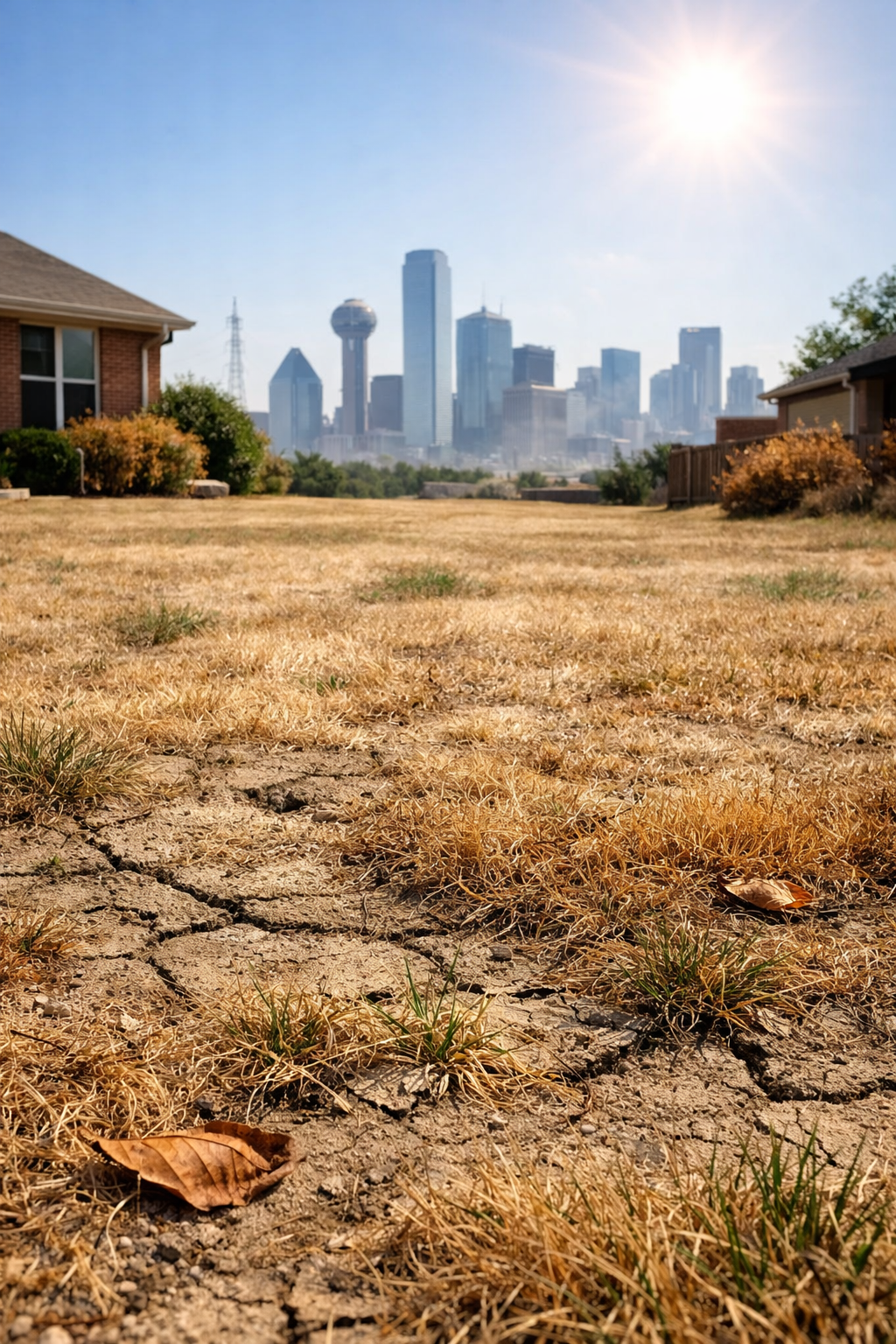
If you have lived in North Texas for more than one summer you already know what August does to a yard. The grass goes from looking decent in June to struggling, patchy, and burnt out by mid-July, and by August a lot of homeowners have just given up on it until the weather breaks. The problem is that by the time you give up, the damage being done is going to cost you a lot more to fix in the fall than it would have if you had understood what was actually happening.
First, it helps to know that most lawns in the DFW area are St. Augustine or Bermuda grass, and both handle heat differently. Bermuda is actually pretty tough in Texas summers and goes dormant rather than dying when it gets stressed. The brown you are seeing in a Bermuda lawn in August is often dormancy, not death, and it will bounce back on its own when temperatures drop and rain returns. St. Augustine is a different story. It does not go dormant the same way, it just struggles, and if it is already dealing with poor drainage, compacted soil, or inconsistent watering on top of the heat, it can thin out significantly and leave you with bare patches that need real work to recover.
The number one mistake homeowners make in a DFW summer is watering too little or at the wrong time. Watering in the middle of the day means most of the moisture evaporates before it ever reaches the roots. Watering too lightly encourages shallow root growth which makes the grass even more vulnerable to heat stress. The goal is deep, infrequent watering early in the morning, ideally between 4am and 8am, so the water has time to soak into the root zone before the heat kicks in. If you have an irrigation system and it is not already programmed for early morning cycles, change that today.
The second mistake is mowing too short. A lot of homeowners think cutting the grass shorter means they can go longer between mows. What it actually does in summer is remove the leaf blade that provides shade for the soil, which drives up soil temperature and stresses the root system further. In summer, raise your mower deck. St. Augustine should be kept at around 3.5 inches, Bermuda at 1.5 to 2 inches depending on the variety.
Fertilizer is another one that trips people up. Putting down a heavy nitrogen fertilizer in the peak of a Texas summer pushes new growth that the plant does not have the water reserves to support, and it can actually make things worse. If you are going to fertilize, do it in late spring before the worst heat arrives, or wait until early fall when the grass is coming out of stress and ready to take up nutrients again.
The lawns that look the best in DFW neighborhoods by September are almost always the ones that had an irrigation system running on a proper schedule, were mowed at the right height, and were not over-fertilized in July. None of that is complicated but it does require being intentional about it before the heat arrives rather than trying to fix things after the damage is done.
If your lawn took a beating this summer and you want to go into fall with a plan to bring it back, EcoFlow can help. We do sod installation, fertilizer applications, weed control treatments, and irrigation system checks to make sure everything is set up properly before the growing season picks back up. Give us a call at (469) 224-8300 or reach out at info@ecoflowlandscape.com and we will take a look at what your yard actually needs.